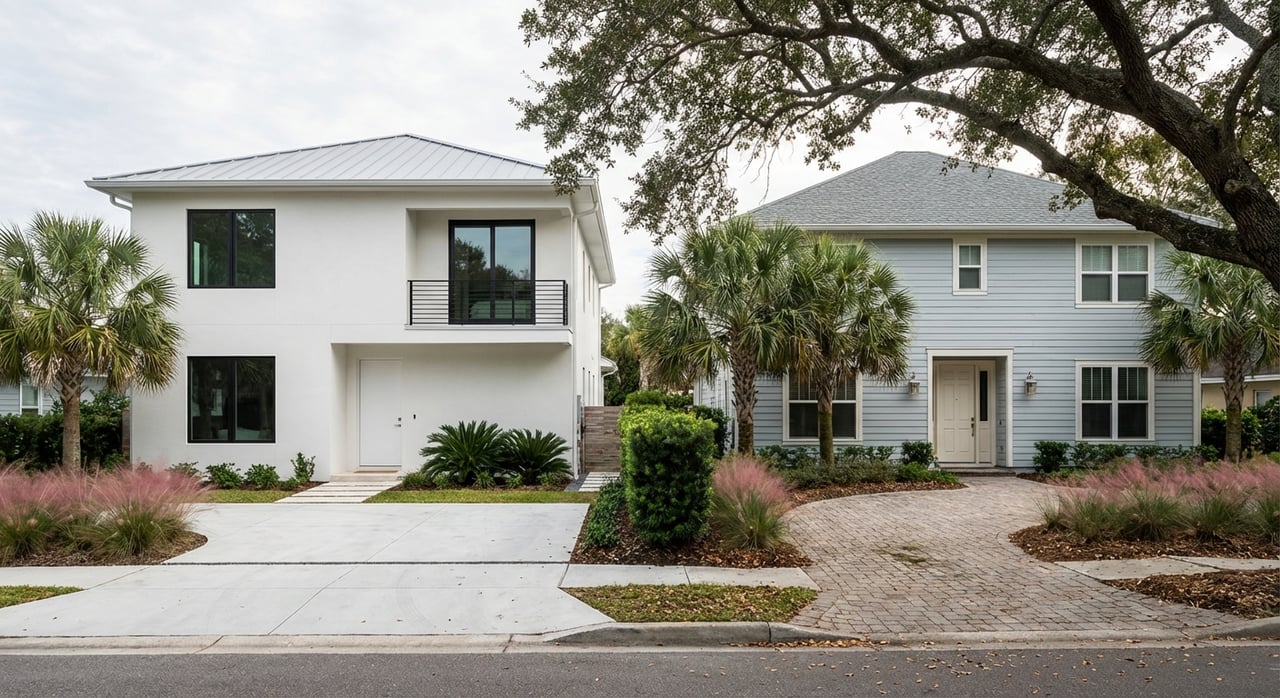
Should you build new or buy a resale in Nocatee? It is a great question, especially if you are timing a move, weighing budget, and hoping to land near the action in Town Center. Both paths can work beautifully here. By the end of this guide, you will understand timelines, incentives, warranties, CDD costs, and inspections so you can choose with confidence. Let’s dive in.
New construction in Nocatee
Builders and neighborhoods
Nocatee is a master‑planned community with a steady pipeline of new villages and model homes. Multiple national and regional builders operate here, and new neighborhoods open on a regular cycle. That ongoing activity keeps options fresh and gives you flexibility on floor plans, lots, and move‑in timing. For an overview of who is building where, review the community’s builder roster in the Nocatee news hub for agents and buyers. You will see active names and village groupings across the community’s map in that resource. Nocatee’s builder overview explains the landscape.
Nocatee regularly ranks among the best‑selling master‑planned communities in the country, which is one reason you will find both quick‑move inventory and build‑to‑order options available most months. That balance matters if you have a firm start date or want time for design selections. See Nocatee’s sales ranking update for context.
Timeline to move‑in
Your timing usually drives the choice.
- Quick‑move or inventory homes often close in about 30 to 90 days if they are complete or nearly done. Builders like Toll Brothers list quick‑move availability so you can filter by timing. Browse a national quick‑move example to understand timing.
- Build‑to‑order timelines commonly run 6 to 12 months depending on the stage at contract and permitting. Custom or complex builds can take longer. A buyer timeline overview explains typical steps and delays.
Expect some variables. Permitting cycles, summer storms, trade schedules, material lead times, and design‑center choices can shift dates. Keep a small buffer for closing and arrange a backup plan if your lease or current home sale date is tight.
Incentives and financing
Builders adjust incentives as market conditions change. Common offers include mortgage rate buydowns, closing‑cost credits, and upgrade allowances. These can make a meaningful difference in your payment, especially if the buydown is permanent or multi‑year. Incentives are usually tied to preferred lenders and can expire quickly, so you want every offer in writing before you sign. Here is a practical explainer on builder rate buydowns and how to compare scenarios.
Tip: Run two cash‑flow views before you commit. Compare your payment during the buydown period and after it ends, then add projected CDD, HOA, insurance, and utilities to both. That gives you a real apples‑to‑apples cost.
Inspections and punch lists
New homes are not inspection‑free. You still want an independent, licensed home inspector.
- Pre‑drywall inspection: If permitted, a framing inspection can catch items before walls are closed, and often includes photos for documentation. See typical costs and why buyers choose this step.
- Final inspection and walkthrough: The builder will complete internal quality checks and schedule a homeowner walkthrough with a punch list. Expect a few follow‑ups after move‑in. Keep your inspection reports and walkthrough notes organized for warranty claims if needed.
Warranties that matter in Florida
Florida law now sets a baseline for new‑home warranties. As of July 1, 2025, builders must provide at least a transferable one‑year warranty covering construction defects that create a material Florida Building Code violation. Review the statute for the exact language and scope. Read the HB 623 text for details.
Many builders also offer third‑party warranty programs that go beyond one year, such as 1 year on workmanship, 2 years on systems, and a longer structural warranty. Ask how long each coverage lasts, who underwrites it, and whether it is transferable to a new owner. Industry commentary explains how HB 623 fits with common builder warranties.
CDD, HOA, and your monthly budget
Most Nocatee neighborhoods are within Community Development Districts that fund infrastructure and amenities. CDD assessments typically appear as non‑ad valorem lines on your St. Johns County tax bill and will affect your monthly housing cost and loan qualification. CDD and HOA fees vary by village and sometimes by lot, so confirm them at the address level before making an offer. You can review district information and assessment basics here: Tolomato CDD resource center.
Resale homes in Nocatee
Timeline and negotiation
If you need a firm date, resale is often faster. Most financed resale purchases close in 30 to 60 days, barring unusual repairs or title issues. You typically have more room to negotiate on price and repairs with a resale than with a builder, though sellers rarely offer the same level of permanent rate relief you may see in a builder buydown. Here is a simple timeline reference for resale closings.
Inspections and insurance priorities
Your standard resale inspection set can include a general home inspection plus wood‑destroying organism report, and separate roof, pool, or seawall checks when applicable. For insurance, some homes may need wind‑mitigation or four‑point reports depending on age and systems.
Flood risk can vary by neighborhood. If a home sits in a FEMA Special Flood Hazard Area, a lender will require flood insurance. Always check the specific address on county or FEMA maps and obtain quotes early so you understand the monthly impact. This guide shows how to review St. Johns County flood zones and mapping resources: How to check flood zones in St. Johns County.
Pros and cons to weigh
Resale pros often include immediate occupancy, established landscaping and neighborhood character, known utility and tax history, and more flexibility to negotiate price or repairs.
Potential tradeoffs include older roofs, HVAC, and appliances that may need replacement sooner than a new build, along with varied energy performance depending on the home’s age. You can offset some risk with targeted inspections, a home warranty service contract, or by negotiating credits toward future updates.
Which path fits you? A simple framework
Budget and monthly costs
- Add price, taxes, HOA dues, and CDD assessments for each property you are considering. Use real numbers from the parcel’s current tax bill and association budgets. CDDs vary by village, so always verify at the address level using the district’s resource center.
- If a builder offers a rate buydown or credits, compare your net monthly payment during and after any promotional period. Use the same insurance and CDD/HOA assumptions for both scenarios. A quick worksheet or spreadsheet helps keep it clear.
Timeline certainty
- Need to close within 2 months: Focus on resale or quick‑move new homes. Quick‑move pages show how builders present near‑term options.
- Can wait 6 to 12 months: Explore build‑to‑order for more lot and design choice.
Customization and finishes
- Want specific finishes, structural options, or a new‑home feel: New construction gives you design‑center control and consistent warranties.
- Comfortable updating after closing: Resale plus a targeted remodel can deliver value and location flexibility.
Risk tolerance and peace of mind
- Prefer fewer near‑term repairs: New construction with clearly defined warranty coverage may fit better. Florida’s minimum one‑year statutory warranty for material code violations adds a baseline layer of protection. Review HB 623 to understand the floor and ask each builder for their full, written warranty.
- Comfortable trading repairs for price: Resale can offer stronger negotiation leverage on needed fixes or credits, which you can use to fund upgrades.
Pre‑offer checklists
If you are buying new construction
- Confirm the full warranty package in writing, including term lengths, what is covered, who underwrites it, transferability, and the claims process. This overview explains how builder warranties are commonly structured.
- Get current CDD and HOA budgets for the specific lot. Use them in your monthly qualification math. Start with the district’s resource hub.
- Request the target closing date, key contingency deadlines, deposit schedule, and design‑center meeting timeline.
- Schedule independent pre‑drywall and final inspections where allowed. Here is a quick read on why many buyers choose a pre‑drywall inspection.
- Put all incentives in writing before signing, and compare your payment with and without any rate buydown. This explainer shows how to evaluate buydowns.
If you are buying a resale
- Order a full home inspection and a wood‑destroying organism report. Add roof, pool, or seawall inspections if relevant to the property.
- Obtain HOA and CDD financials and meeting minutes to understand budgets, reserves, and upcoming projects.
- Check permit history for renovations and confirm final inspections were closed out.
- Get insurance quotes early, including flood if the address is in a higher‑risk zone. Use those quotes in your monthly budget.
- Use inspection findings to negotiate repairs, credits, or a price adjustment.
How The Coastal Home Group helps
You do not have to navigate this alone. As a neighborhood‑focused team that supports both resale and new‑build purchases in Nocatee, we walk with you from first tour to closing day. For new construction, we coordinate design‑center timelines, third‑party inspections, walkthrough punch lists, and warranty documentation. For resale, we line up inspections, insurance quotes, and strong negotiation strategies that reflect current market conditions.
Nocatee’s mix of quick‑move inventory, build‑to‑order options, and established resales means you can match your move to your life. We will help you confirm incentives, CDD assessments, flood mapping, and warranty terms for any address you are considering so your decision is clear and confident.
Ready to compare real homes and builder options side by side? Reach out to The Coastal Home Group to start your plan.
FAQs
How long does it take to build a new home in Nocatee?
- Many build‑to‑order homes run about 6 to 12 months depending on permitting, weather, and selections, while quick‑move inventory can close in roughly 30 to 90 days.
What is a CDD in Nocatee and how does it affect my payment?
- A Community Development District funds infrastructure and amenities, and its assessment appears on your property tax bill, which affects monthly cost and loan qualification.
Are builders in Nocatee offering rate buydowns right now?
- Incentives change frequently, but builders often use buydowns or credits; always get written terms and compare payments during and after any buydown period.
Do I still need an inspection on new construction?
- Yes; schedule independent pre‑drywall and final inspections to catch issues early and document items for punch lists and warranty claims.
How do flood zones impact buying a home in Nocatee?
- If a property sits in a FEMA Special Flood Hazard Area, lenders require flood insurance; always check the specific address on county or FEMA maps and price coverage early.